Your Adsense Link 728 X 15

Pages

Search This Blog

Pathway to food security

Posted by ABC Monday, 17 June 2013 0 comments
The National Food Security Bill 2011 envisages food security for nearly 67 per cent of population of India, thus guaranteeing food as a justiciable, legal entitlement to its people. The Targeted Public Distribution System (TPDS) was introduced in June, 1997. It envisaged that Below Poverty Line (BPL) population would be identified in every state and every BPL family would be entitled to a certain quantity of food grains at highly subsidised prices.


The salient features of the National Food Security Bill are:

  1. PROVISIONS FOR FOOD SECURITY – 
  • Every person belonging to priority households shall be entitled to receive five kilograms of food grains per person per month at subsidised prices from the State Government under the Targeted Public Distribution System.
  • Every pregnant woman and lactating mother shall be entitled to meal, free of charge during pregnancy and six months after child birth so as to meet the nutritional standards.
  • Every child up to the age of fourteen years shall be entitled to free mid-day meal in all schools run by local bodies, Government and Government aided schools for his/her nutritional needs.
  • The State Government shall, through the local anganwadi, identify and provide meals, free of charge, to children who suffer from malnutrition.
2. FOOD SECURITY ALLOWANCE - In case of non-supply of entitled quantities of food grains or meals to the entitled persons, such persons shall be entitled to receive such food security allowance from the concerned State Government.

3.  REFORMS IN TARGETED PUBLIC DISTRIBUTION SYSTEM - The Central and State Governments shall endeavour to progressively to undertake necessary reforms that shall include doorstep delivery of food grains to the Targeted Public Distribution outlets, application of information and communication technology including end-to-end computerisation to ensure transparent recording of transactions at all levels and to prevent diversion, leveraging “aadhar” for unique identification and introducing schemes such as cash transfer, food coupons and so on.


4.  WOMEN EMPOWERMENT – The eldest woman who is not less than eighteen years of age, in every eligible household, shall be the head of the household for the purpose of issue of ration cards.

5.  GRIEVANCE REDRESSAL MECHANISM – Every State Government shall put in place an internal grievance redressal mechanism which may include call centres, helpline numbers, designation of nodal officers for expeditious and effective redressal of grievances of the aggrieved persons in matter relating to distribution of entitled food grains.

6.  OBLIGATIONS OF CENTRAL GOVERNMENT FOR FOOD SECURITY – The Central Government shall, for ensuring regular supply of food grains to persons belonging to eligible households, allocate from the central pool the required quantity of food grains to the State Governments under the Targeted Public Distribution System.

7.  TRANSPARENCY AND ACCOUNTABILITY – All Targeted Public Distribution System related records shall be placed in the public domain and kept open for inspection to the public. Every local authority shall conduct periodic social audits on the functioning of fair price shops, Targeted Public Distribution System and other welfare schemes, and cause to publicise its findings and take necessary action.

8.  SUBSIDISED PRICES UNDER TARGETED PUBLIC DISTRIBUTION SYSTEM – Eligible households shall be entitled to food grains at subsidised price not exceeding rupees 3 per kg for rice, rupees 2 per kg for wheat and rupees 1 per kg for coarse grains for a period of three years.

Good fences make good neighbours

Posted by ABC Friday, 7 June 2013 0 comments

As the world looks to Asia to be the engine driving the global economy, it is imperative for India and China to deepen their friendship and promote cooperation in various areas in the larger interest of bilateral relations and for the cultural and economic development of both the civilisations that represent the two pillars of the civilisation of the East. Both the countries have the ability and wisdom to resolve their differences through mutual consultations with a constructive and cooperative approach. Therefore, difficult issues left over from history, particularly the border dispute should not become an obstacle in the path of development or prevent either nation from becoming an anchor of world peace. As both economies have embarked on the path of social and economic development, catapulting the economy to a higher growth trajectory, improving people’s standard of living and enhancing trade relations are some of the primary objectives both of them seem to accomplish. This calls for a peaceful and tranquil neighbourhood and an environment to facilitate dialogue and cooperation between both the countries. Additionally, there is an urgent need to enhance mutual trust rather than increasing mutual suspicion.

In this era of globalisation that has witnessed the integration of different economies of the world, India and China have a pivotal role to play in reforming the existing international order through mutual interdependence. Thus, a peaceful periphery is essential for both the countries to achieve their multifarious development goals. It is high time for both sides to calm the troubled waters and steadily push forward the negotiation process so as not to let the stand-off over the demarcation of India-China border affect the overall development of bilateral relations. The mechanism for consultation and coordination over the border affairs needs to be strengthened and effective platforms should be established for smooth communication through diplomatic channels. Both sides should perceive from a holistic perspective, stick to the consensus that has been reached, maintain and make effective use of the existing peace mechanisms, hold the spirit of peace and friendship and persevere for a reasonable and mutually acceptable solution to all their differences.


The 21st century belongs to Asia. India and China ought to live in harmony and play an increasingly important role in the convergence of both the emerging and fastest developing global economies.

Should betting be legalized?

Posted by ABC Thursday, 6 June 2013 0 comments

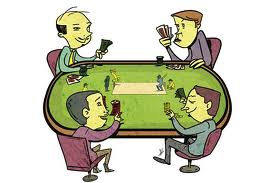
After the recent exposure of the betting and spot-fixing scandal in the Indian Premier League (IPL), the gentleman’s game seems to have become a gambler’s paradise. As the game plunges into glorious uncertainty, there is an unwarranted clarion call by some to put a ban on the IPL matches. IPL, they feel, is an extravaganza for the business tycoons and various Bollywood personalities to collude and further their monetary interests, thus offering a fertile ground for lucrative betting. This has severely degraded the majesty of the sport and has led to the moral decline of cricket and cricketers. The hyper commercialization of the sport and the accompanying culture has, however, raised a contentious issue, “Should betting be legalized in cricket?”

According to a survey by the auditing firm KPMG, betting to the tune of Rs. 3,00,000 crore takes place annually in India. This whopping sum of black money is adversely affecting our economic growth by breeding a parallel economy. Even after investing substantial resources and cracking the whip on bookies that operate in underground ways, the government has failed to enforce a blanket ban on this ‘heinous’ and ‘corrupt’ practice of earning money. A number of arrests have been made, several bank accounts used to carry out transactions of the booty have been seized and a large number of communication equipment have been confiscated, but  this illegal practice, it seems, has shown no signs of abatement. 


In such a scenario, the government should think of legalising and regulating betting that would entail the use of white money instead of black money. Moreover, it may generate a revenue of Rs. 12,000 to 19,000 crore per annum for the exchequer. This could have several potential benefits. Firstly, it could ensure accountability for the massive amounts of money transferred through illegal channels and reduction in the cases of match-fixing, spot-fixing, money laundering et cetera. This could also provide a disincentive to the players who succumb to the temptation of the booty and bring disrepute to their nation by corrupting their morals. Secondly, the revenue generated as a consequence of legalized betting could potentially fund sports development, welfare schemes and infrastructure development for various sports. This could offer dual benefit – by preventing the deterioration of sports culture and ensuring a sports lover’s right to a fair game. Thirdly, through proper and active regulation, the young and vulnerable could be protected against the perils of unwise betting behaviour and structured sleaze.

On the contrary, even though regulated and legalized, betting may lead to social and cultural problems. Anybody with black money would refrain from voluntarily inviting the risk of assessment of his/her income sources and auditing of accounts by the government. Moreover, gambling lobby might become too strong to overcome any prosecution through legal loopholes and sloppy judicial process, in the long run. 

Prudence demands that a suitable mechanism be devised to bring those involved in illegal betting within the ambit of the law and the glory of the sport be regained by ridding it of its malaise.

A journey from fame to shame

Posted by ABC Tuesday, 4 June 2013 0 comments

The Indian Premier League (IPL) has been hailed as a great source of entertainment in India where cricket is a religion for a large number of people. The sport has, undoubtedly, been a strong unifying force and has often brought people together from all walks of life, irrespective of their caste, creed or economic status in the society. Such is the reverence shown to this sport that no other sport is referred to as to describe the ‘dignity, honesty, uprightness and integrity’ of a human activity as cricket. But unfortunately, sporting events like the IPL have led to the hyper-commercialisation of the gentlemen’s game to a point where it has nearly destroyed the soul of this sport and turned it into a religion devoid of any spiritual ethics. By indulging in heinous practices like spot-fixing and betting, which used to be the prerogative of the criminals, a few morally corrupt cricketers and an avaricious cricket administration have brought disrepute to the nation and cheated millions of cricket lovers by undermining their right to a fair game.

The unfolding of the recent spot-fixing and betting scandal is merely a manifestation of a deep rooted betting mechanism involving bookies and high profile personalities who have been exploiting the sport’s popularity, their financial and political clout and their links with the sports administration to sweep the financial irregularities and ever increasing venality under the carpet. By luring young cricketers who could easily succumb to the largesse offered to them by these unprofessional men, they have been playing havoc and controlling the matches to their advantage. Such lack of credibility and control over the wrongdoings has converted cricket stadia into gambling clubs!


The media as well as the spectators are equally responsible for the moral corruption of the sport that has today, fallen from fame to shame. It is a bitter truth that amidst humongous crowds in stadia, only a few come to watch cricket matches. A large number of people come just to ogle at the scantily-clad cheerleaders, hurl lewd remarks at them and capture their moves in their cell-phones with amorous intentions. For the rest, it’s an occasion to meet friends and organise parties or perhaps be caught by television cameras while ‘cheering’ for their favourite cricketers. The after-match parties organised for the cricketers by their team owners facilitate spot-fixing activities as the vulnerable cricketers are easily approached by bookies and their agents with the booty.

The need of the hour is to dismantle this structure of sleaze and corrupting culture. It is imperative on the sports administration, both morally and in the interest of cricket, to suspend or ask for the resignation of all such officials who are found to have links with the forces, both internal and extraneous, that have put India’s cricket establishment in the dock. Any cricketer whose involvement in this scandal is ascertained must be banned from playing cricket and severely punished for playing with the sentiments of the cricket lovers. The media should refrain from sensationalising this scandal and instead act prudently by indulging in investigative journalism rather that pack journalism. The cricket lovers may express their dissent and anguish by refusing to watch cricket matches till the sport is rid of its malaise and regain its lost image as a gentleman’s game. The body carrying out the investigation ought to be fair in its judgement than merely find a scapegoat and leave the real culprits to continue in positions of power.


Posted by ABC Tuesday, 21 May 2013 0 comments
The blog will be updated soon.
Related Posts Plugin for WordPress, Blogger...
free counters

Labels

Aam Aadmi Party acid attacks activities adventure alcohol angels anguish animals anna hazare anvil anxiety Arvind Kejriwal auspicious battle begging Big Bazaar blood booze catastrophic child marriage childhood clild labour combat common man confidence corrupt corruption country courage cracker crime culture cyclone debts delirium destination destiny determination development disaster discrimination doctor dream drugs education elections embarrasment emotions emphatic engineer enlighten environment eternal evils explosion fable failure FDI in retail. India female flood FMCG foetus freebies freedom funds future glory goal god goddess grandeur Happy new year 2013 havoc hazard health hearts heat heavenly helping hand hero horizon Horror illiteracy indelible marks India Indian Premier League industries infrastructure insane institution international jan lokpal bill jerk journey kingdom leader leather lethal liquor love machine Mahatma Gandhi marriage MARS ORBITER MISSION masculine medals memories menace mental mercy mid-day meal milestones money morning mundane Narendra Modi nature net neutrality olympics opportunities Opposition ordeal orthodox paradise passion peace pleasure pledge political poverty prejudice premier prepare pristine progress ragging rape religious Republic Day reservation reward rifle sacrifice scams scared secular shadows singing sleep smoking soldier solemn sorrow soul sports stallion struggle sunshine support sweet swift tempest temptation The King's Speech tomorrow tornado torture trauma tri color triumph trust truth underachiever usher venom vices violence virtues vision vivacious vote voyage vulnerable WalMart watchdog west woods worship youth zenith

About

My blog is an innovative amalgamation of my thoughts, how i perceive and react to different events in the ordinary business of life and at the same time entertain the readers and sensitize them.
Protected by Copyscape Plagiarism Detector Clipart